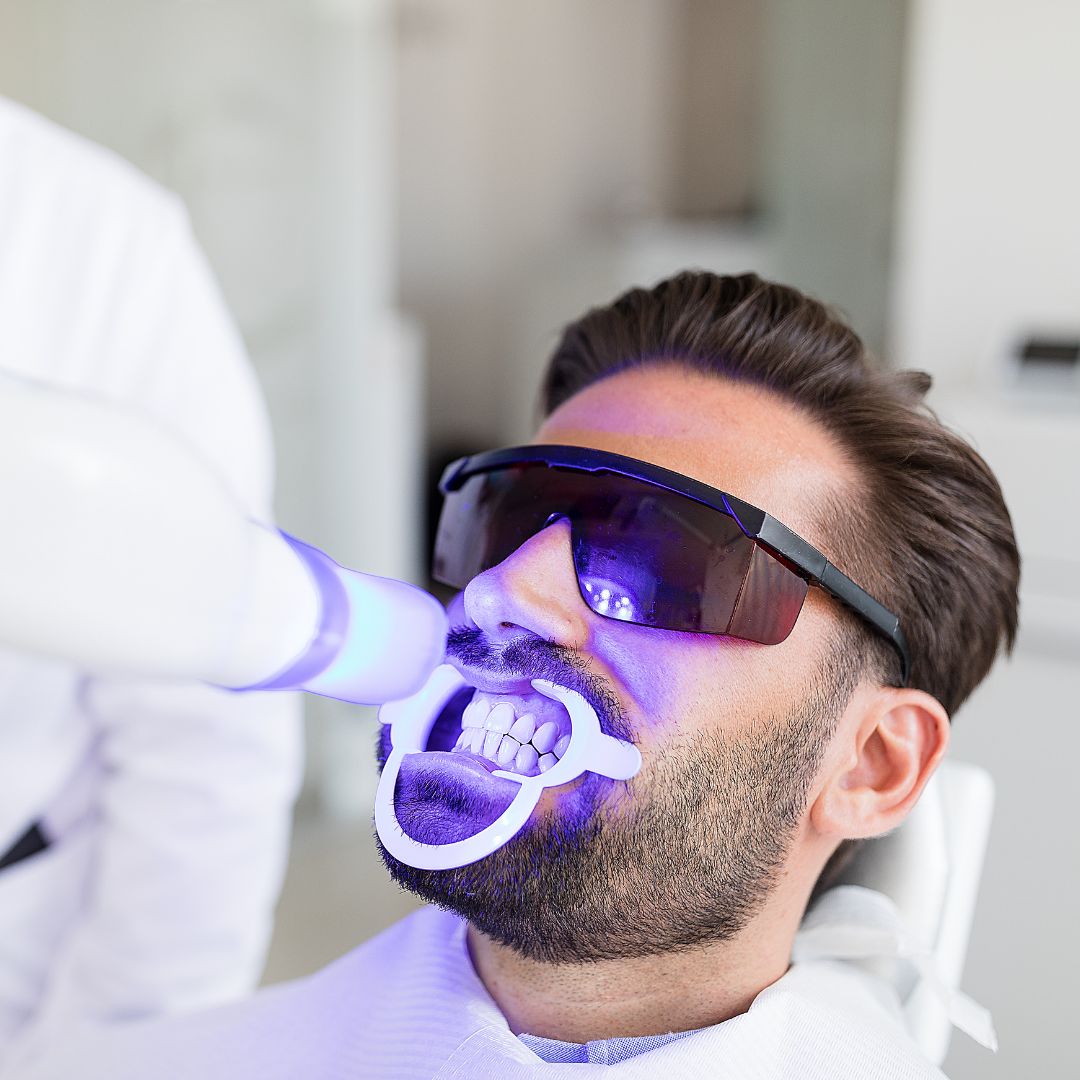
Teeth Whitening in Kalapatti, Coimbatore
Professional Teeth Whitening for a Brighter, More Confident Smile.
Teeth whitening is a cosmetic dental treatment used to lighten the colour of natural teeth and reduce certain types of tooth staining or discolouration.
If you are considering teeth whitening in Kalapatti, Coimbatore, a dental assessment can help determine the cause of the discolouration and whether professional whitening is suitable for your teeth.
At Gold's Dental Clinic in Kalapatti, Coimbatore, patients can discuss their cosmetic dental concerns with Dr. Thangadurai Paramasivam, Cosmetic Dental Surgeon and Consultant Advanced Oral Implantologist, and understand whether professional teeth whitening, teeth bleaching, or another cosmetic treatment is appropriate for their individual dental condition.
The expected degree of whitening can vary between patients depending on the original tooth colour, type of staining, enamel condition, oral health, and response to the whitening treatment.
Book Your ConsultationWhat Is Teeth Whitening?
Teeth whitening is a cosmetic dental procedure designed to lighten the colour of natural teeth and reduce certain forms of tooth discolouration.
Professional whitening generally uses a whitening agent to act on stains or coloured compounds within the tooth structure.
Teeth whitening may help improve the appearance of teeth affected by:
- Certain food and drink stains
- Tea or coffee staining
- Tobacco-related staining
- Age-related tooth discolouration
- Some forms of yellowish tooth colour
- Other suitable forms of external or internal discolouration
However, not every type of tooth discolouration responds equally to whitening.
A dental examination can help identify the likely cause of staining before treatment is recommended.
What Is Teeth Bleaching?
Teeth bleaching is a term commonly used for tooth whitening procedures that use peroxide-based bleaching agents to lighten the natural tooth colour.
In dental practice, the terms teeth whitening and teeth bleaching are sometimes used interchangeably, although whitening can also be used more broadly to describe cosmetic procedures intended to improve tooth colour.
Professional teeth bleaching may involve a controlled concentration of a whitening agent under dental supervision.
The appropriate whitening approach depends on:
- Type of staining
- Existing tooth colour
- Tooth sensitivity
- Enamel condition
- Gum health
- Existing dental restorations
- Overall oral health
Why Do Teeth Become Discoloured?
Tooth discolouration can occur for several reasons, and identifying the cause helps determine whether teeth whitening is likely to be effective.
Food and Drink Staining
Regular consumption of strongly coloured foods and drinks such as tea, coffee, and certain sauces can contribute to surface staining over time.
Tobacco and Smoking
Tobacco use can contribute to yellow or brown staining on the tooth surface.
Age-Related Discolouration
As people age, changes in the enamel and underlying dentine can make teeth appear darker or more yellow.
Certain Medications or Dental Conditions
Some types of intrinsic tooth discolouration can be associated with medications, developmental conditions, or other dental factors. Such staining may respond differently to conventional whitening.
Existing Dental Restorations
Fillings, crowns, veneers, and other restorations do not whiten in the same way as natural teeth. If visible restorations are present, whitening may create a difference in colour between the natural teeth and the existing restoration. This should be considered before beginning cosmetic whitening.
What Types of Tooth Stains Can Teeth Whitening Address?
Professional teeth whitening is generally more predictable for some forms of surface staining than for deeper intrinsic discolouration.
Extrinsic Tooth Stains
Extrinsic stains occur primarily on the outer surface of the teeth and can be associated with:
- Tea
- Coffee
- Tobacco
- Certain foods
- Plaque and deposits
Professional cleaning may sometimes be sufficient for some surface deposits, while whitening may be considered when the natural tooth colour itself also needs to be lightened.
Intrinsic Tooth Discolouration
Intrinsic discolouration occurs within the tooth structure. It can be associated with factors such as:
- Certain medications
- Dental trauma
- Developmental changes
- Natural variation in tooth colour
- Age-related changes
Some intrinsic stains may respond less predictably to conventional whitening. A dental assessment is therefore important before assuming that whitening will correct every type of discolouration.
Who May Be Suitable for Professional Teeth Whitening?
Professional teeth whitening may be suitable for adults with healthy teeth and gums who want to improve the colour of their natural teeth.
Before treatment, your dentist may assess:
- Tooth decay
- Gum health
- Existing restorations
- Tooth sensitivity
- Enamel condition
- Type of staining
- Existing tooth colour
- Previous whitening treatments
If active cavities, gum disease, significant sensitivity, or another dental problem is present, that condition may need to be addressed before whitening.
Teeth whitening is primarily a cosmetic treatment for natural teeth, so it is important to understand what whitening can and cannot change before proceeding.
Can Everyone Get Their Teeth Whitened?
No. Teeth whitening is not suitable for every person or every type of tooth discolouration.
Whitening may need to be postponed or reconsidered when a patient has:
- Untreated tooth decay
- Active gum problems
- Significant tooth sensitivity
- Cracked or damaged teeth
- Certain types of intrinsic staining
- Extensive visible dental restorations
- Other untreated oral health concerns
A dental examination helps identify whether whitening is appropriate and whether another treatment may better address the cosmetic concern.
Can Teeth Whitening Whiten Fillings, Crowns and Veneers?
No. Dental restorations such as fillings, crowns, and veneers do not whiten in the same way as natural teeth.
This is particularly important when restorations are visible in the smile.
If natural teeth are whitened while an existing restoration remains unchanged, a colour difference may become more noticeable.
Your dentist can assess the existing restorations and discuss whether they should be considered as part of the overall cosmetic treatment plan.
How Does Professional Teeth Whitening Work?
Professional teeth whitening involves applying a dental whitening agent to the natural teeth to reduce certain types of tooth discolouration.
The treatment generally involves:
- Examining the teeth and gums
- Identifying the likely cause of discolouration
- Checking for cavities, sensitivity, or existing restorations
- Selecting an appropriate whitening approach
- Applying the whitening agent according to the treatment protocol
- Monitoring the teeth and surrounding tissues
- Providing aftercare instructions
The exact technique and duration depend on the whitening method, concentration of the whitening agent, and individual dental condition.
What Happens During a Teeth Whitening Consultation?
A teeth whitening consultation helps determine whether whitening is suitable and what type of result can reasonably be expected.
Your dentist may assess:
- Natural tooth colour
- Type and severity of staining
- Tooth sensitivity
- Enamel condition
- Presence of cavities
- Gum health
- Existing fillings
- Crowns or veneers
- Previous whitening treatments
If an underlying dental problem is identified, it may need to be treated before cosmetic whitening is considered.
This assessment is particularly important when you have visible dental restorations, because restorations do not change colour in the same way as natural teeth.
What Are the Different Approaches to Teeth Whitening?
Teeth whitening can be performed using different approaches depending on the patient's needs and the dental professional's treatment plan.
In-Office Professional Whitening
Professional in-office whitening is performed under dental supervision using a controlled whitening protocol. It may be considered when a patient wants professional cosmetic whitening and is suitable for the treatment.
Dentist-Supervised Take-Home Whitening
In some cases, a dentist may recommend a professionally supervised take-home whitening approach using appropriate whitening products and instructions. This allows the whitening process to take place over a longer period according to the prescribed protocol.
Whitening Products Used Outside Professional Care
Over-the-counter whitening products are also available, but their suitability can vary. A dental assessment can help determine whether a whitening approach is appropriate, particularly if you have sensitive teeth, existing restorations, cavities, or gum problems.
Is Teeth Whitening Safe?
Professional teeth whitening can be appropriate for suitable patients when the teeth and gums have been assessed and the whitening treatment is used according to professional instructions.
However, whitening is not completely free from possible side effects.
Some patients may experience:
- Temporary tooth sensitivity
- Gum irritation
- Mild discomfort
- Increased sensitivity to hot or cold
The likelihood and severity of these effects can vary between individuals.
Following the recommended whitening protocol can help avoid unnecessary exposure to whitening agents.
Does Teeth Whitening Cause Sensitivity?
Temporary tooth sensitivity is one of the more common effects associated with teeth whitening.
Sensitivity may occur when the whitening agent temporarily affects the tooth's response to temperature or other stimuli.
The likelihood can depend on:
- Existing tooth sensitivity
- Concentration of whitening agent
- Treatment duration
- Tooth condition
- Previous whitening treatments
If you already have sensitive teeth, inform your dentist before starting treatment so your suitability and whitening approach can be assessed.
Persistent or severe sensitivity should not be ignored and may require dental evaluation.
How Long Does a Teeth Whitening Treatment Take?
The duration of teeth whitening varies according to the treatment method, whitening product, concentration, and individual treatment plan.
Professional in-office treatment may be completed within a scheduled dental appointment, while dentist-supervised take-home whitening generally takes place over a longer period.
The exact duration should therefore not be presented as the same for every patient.
Your dentist can explain:
- Expected treatment duration
- Number of applications or sessions
- When changes in tooth colour may become noticeable
- Whether additional treatment may be required
What Results Can You Expect From Teeth Whitening?
Teeth whitening can lighten the colour of natural teeth, but the degree of whitening varies between individuals.
The outcome can be influenced by:
- Original tooth colour
- Type of staining
- Severity of discolouration
- Tooth structure
- Whitening method
- Individual response to treatment
- Existing restorations
Whitening should therefore not be described as producing an identical shade for every patient.
Some types of intrinsic discolouration may also respond less predictably than surface staining.
How Long Does Teeth Whitening Last?
Teeth whitening is not a permanent change in tooth colour.
Over time, teeth can become stained again due to factors such as:
- Tea and coffee consumption
- Tobacco use
- Certain foods and drinks
- Natural ageing
- Oral hygiene
- Individual habits
The duration of the whitening effect varies between individuals.
Good oral hygiene and appropriate dental follow-up can help maintain the appearance of the teeth.
What Should You Do After Teeth Whitening?
Following appropriate aftercare can help maintain the appearance of whitened teeth and reduce avoidable sensitivity.
Your dentist may recommend:
- Maintaining regular brushing
- Cleaning between the teeth
- Limiting frequent exposure to strongly staining foods and drinks
- Avoiding tobacco
- Following any specific post-whitening instructions
- Attending routine dental examinations
If your teeth feel temporarily sensitive, follow the sensitivity-management advice provided by your dental professional.
Can You Eat Normally After Teeth Whitening?
Your dentist may recommend temporarily limiting strongly coloured foods and drinks after whitening, depending on the treatment approach and your individual situation.
Foods and beverages that can contribute to staining include:
- Tea
- Coffee
- Certain sauces
- Strongly coloured foods
- Tobacco products
The specific post-treatment dietary advice can vary, so follow the instructions provided after your whitening procedure.
What Is the Difference Between Teeth Whitening and Teeth Bleaching?
Teeth whitening and teeth bleaching are closely related terms, but they can be used differently depending on the treatment being described.
Teeth whitening is a broader term for cosmetic procedures intended to improve the colour of natural teeth. Teeth bleaching generally refers to whitening procedures that use peroxide-based agents to lighten the natural tooth colour.
The appropriate approach depends on:
- Type of tooth discolouration
- Existing tooth colour
- Tooth sensitivity
- Enamel condition
- Gum health
- Existing restorations
- Desired cosmetic outcome
A dental assessment can help determine which whitening approach is suitable.
Can Teeth Whitening Remove All Types of Tooth Stains?
No. Teeth whitening does not remove every type of tooth discolouration equally.
Surface stains caused by substances such as tea, coffee, tobacco, and certain foods may respond more predictably to whitening.
Deeper intrinsic discolouration may respond differently and, in some cases, may require an alternative cosmetic approach.
Depending on the cause, your dentist may discuss:
- Professional teeth whitening
- Teeth bleaching
- Dental cleaning
- Composite bonding
- Veneers
- Other cosmetic or restorative treatments
The cause of the discolouration should be identified before choosing a treatment.
Is Teeth Whitening Better Than Veneers for Discoloured Teeth?
Teeth whitening and veneers address tooth colour in different ways, so neither treatment is automatically better for every patient.
Whitening may be appropriate when the main concern is the colour of otherwise healthy natural teeth.
Veneers may be considered when the cosmetic concern involves colour together with tooth shape, size, minor irregularities, or certain types of discolouration that may not respond adequately to whitening.
Another important difference is that whitening affects natural teeth, whereas veneers are restorations placed over selected tooth surfaces.
Your dentist can assess the cause of the discolouration before recommending either treatment.
Should You Whiten Your Teeth If You Have Sensitive Teeth?
People with sensitive teeth may still be able to undergo teeth whitening, but their sensitivity should be assessed before treatment.
Existing sensitivity can sometimes become more noticeable during or after whitening.
Your dentist may consider:
- Cause of the sensitivity
- Severity of sensitivity
- Presence of cavities
- Gum recession
- Cracked or damaged teeth
- Previous whitening experience
If an underlying dental problem is responsible for the sensitivity, that condition may need to be treated before cosmetic whitening.
Who Should Postpone Teeth Whitening?
Teeth whitening may need to be postponed when an untreated dental or gum problem could affect the safety or suitability of the treatment.
Whitening may need to be delayed if you have:
- Active tooth decay
- Significant gum disease
- Severe tooth sensitivity
- Cracked or damaged teeth
- Untreated oral problems
- Other conditions requiring dental treatment first
This does not necessarily mean whitening will never be possible. Once the underlying issue has been appropriately managed, your dentist can reassess whether whitening is suitable.
Can Teeth Whitening Be Done Before a Smile Makeover?
Teeth whitening may sometimes be performed as part of a broader cosmetic dental plan, depending on the treatments being considered.
This can be particularly relevant when natural teeth and restorations are both visible in the smile.
Because crowns, veneers, and fillings do not whiten like natural teeth, the sequence of cosmetic treatments may need to be planned carefully.
For example, if a patient requires both whitening and new visible restorations, the desired tooth shade may need to be established before the final restorations are fabricated.
Your dentist can determine the appropriate treatment sequence based on the planned cosmetic procedures.
How Can You Maintain Teeth Whitening Results?
Maintaining a brighter smile requires ongoing oral hygiene and attention to factors that can contribute to new staining.
You can help maintain the appearance of whitened teeth by:
- Brushing regularly with fluoride toothpaste
- Cleaning between your teeth
- Limiting frequent consumption of strongly staining drinks
- Reducing tobacco exposure
- Maintaining regular dental check-ups
- Following your dentist's whitening maintenance recommendations
Teeth naturally change colour over time, so maintenance requirements vary between individuals.
How Often Can You Whiten Your Teeth?
There is no single whitening interval that is appropriate for everyone.
The appropriate frequency depends on:
- Whitening method
- Previous treatment
- Tooth sensitivity
- Existing dental conditions
- Type of staining
- Response to previous whitening
Repeated whitening without appropriate assessment may increase sensitivity or cause unnecessary irritation.
It is therefore better to follow a dentist-supervised whitening plan rather than repeatedly using whitening products without considering your dental condition.
Can Teeth Whitening Be Done on One Tooth?
In selected cases, an individual tooth can require a different whitening approach from the surrounding teeth.
This may occur when one tooth has a different colour because of:
- Previous trauma
- Changes within the tooth
- A previous dental procedure
- Intrinsic discolouration
However, conventional external whitening may not correct every type of single-tooth discolouration.
A dental examination is important to identify why the tooth is darker before deciding on treatment.
How Much Does Teeth Whitening Cost in Kalapatti, Coimbatore?
The cost of teeth whitening in Kalapatti, Coimbatore can vary depending on the whitening method, treatment requirements, severity of staining, and whether preliminary dental treatment is needed.
Factors that may influence the cost include:
- Type of whitening treatment
- Professional in-office or dentist-supervised approach
- Number of teeth being treated
- Existing tooth sensitivity
- Condition of the teeth and gums
- Need for dental cleaning or other preliminary treatment
- Follow-up or maintenance requirements
An individual dental assessment is necessary before providing an appropriate treatment recommendation and cost estimate.
FAQs
Frequently Asked Questions About Teeth Whitening
Teeth whitening is a cosmetic dental treatment used to lighten the colour of natural teeth and reduce certain types of tooth discolouration. The response depends on the cause and severity of the staining and the condition of the teeth.
Teeth bleaching generally refers to whitening procedures that use peroxide-based agents to lighten the colour of natural teeth. The terms teeth whitening and teeth bleaching are sometimes used interchangeably.
Professional teeth whitening can be appropriate for suitable patients when the teeth and gums have been assessed and the treatment is performed according to an appropriate protocol. Temporary sensitivity or gum irritation can occur in some patients.
Teeth whitening is not expected to cause significant pain, but temporary sensitivity can occur during or after treatment. Patients with existing sensitivity should discuss it with their dentist before whitening.
Treatment time depends on the whitening method and individual treatment plan. In-office whitening may be performed during a scheduled appointment, while dentist-supervised take-home whitening takes place over a longer period.
There is no single shade or degree of whitening that can be guaranteed for every patient. Results depend on the original tooth colour, type of staining, tooth structure, whitening method, and individual response.
Teeth whitening is not permanent. Natural teeth can become discoloured again due to diet, tobacco exposure, ageing, oral hygiene, and individual habits.
Whitening can improve certain types of yellowish tooth discolouration, but the outcome depends on why the teeth appear yellow. Some deeper or intrinsic discolouration may respond less predictably.
Professional whitening may help lighten certain stains associated with coffee and tea. However, the extent of improvement depends on whether the staining is primarily surface-related or involves deeper tooth discolouration.
Whitening affects natural tooth structure and does not whiten existing fillings, crowns, or veneers in the same way. If visible restorations are present, your dentist should consider their colour before treatment to reduce the risk of a noticeable shade difference.
Some patients with sensitive teeth may still be suitable for whitening, but the cause and severity of the sensitivity should be assessed first. An underlying dental problem may need treatment before whitening.
Neither treatment is universally better. Whitening is primarily intended to change the colour of natural teeth, while veneers can address colour together with selected changes in tooth shape, size, or appearance.
In some situations, a single discoloured tooth may require a specific treatment approach. Conventional external whitening may not be effective for every cause of single-tooth discolouration, so the tooth should be examined first.
There is no universal interval for everyone. The appropriate frequency depends on the whitening method, tooth sensitivity, dental condition, previous treatment, and individual response.
The cost of teeth whitening in Kalapatti, Coimbatore depends on the treatment method, severity of discolouration, number of teeth involved, existing sensitivity, and whether preliminary dental treatment is required. A consultation is needed for an individual treatment estimate.
Dentist for Teeth Whitening in Kalapatti, Coimbatore
If you are looking for a dentist for teeth whitening in Kalapatti, Coimbatore to address stained or discoloured natural teeth, a dental assessment can help determine whether professional whitening or another cosmetic treatment is appropriate.
At Gold's Dental Clinic in Kalapatti, Coimbatore, patients can discuss their smile and tooth-colour concerns with Dr. Thangadurai Paramasivam, BDS, Dental Surgeon and Consultant Advanced Oral Implantologist.
The assessment can consider:
- Type and severity of tooth discolouration
- Tooth sensitivity
- Enamel condition
- Gum health
- Existing fillings, crowns, or veneers
- Previous whitening treatments
- Desired cosmetic outcome
Depending on the findings, the appropriate option may include professional teeth whitening, teeth bleaching, dental cleaning, veneers, bonding, or another cosmetic dental treatment.
Teeth Whitening Consultation in Kalapatti, Coimbatore
If you are concerned about yellow teeth, coffee or tea stains, tobacco staining, age-related discolouration, or an uneven tooth colour, a professional dental examination can help identify the cause before treatment.
At Gold's Dental Clinic, you can discuss your concerns with Dr. Thangadurai Paramasivam, Cosmetic Dental Surgeon and Consultant Advanced Oral Implantologist, and understand whether teeth whitening is suitable for your individual dental condition.
Schedule Your Teeth Whitening ConsultationVisit Gold's Dental Clinic
Clinic Address
Gold's Dental Clinic
First Floor, 31/2, Vilanguruchi Road,
Near Four Function, Above Apollo Pharmacy,
Kalapatti, Coimbatore, Tamil Nadu - 641048.
Medical Disclaimer
The information on this page is provided for general educational purposes and does not replace a professional dental examination, diagnosis, or personalised treatment advice. The suitability of teeth whitening or teeth bleaching, expected degree of colour change, treatment duration, sensitivity, cost, and long-term results can vary depending on the individual's teeth, gums, type of discolouration, existing restorations, and overall oral health.