Pediatric Dentist in Kalapatti, Coimbatore
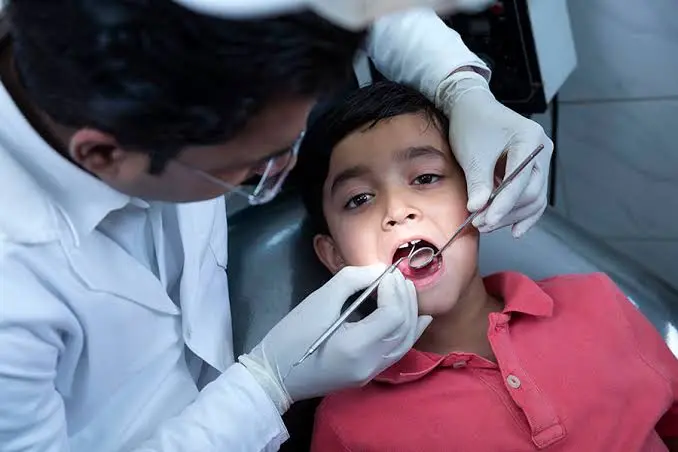
Gentle and Comprehensive Dental Care for Children
Pediatric dentistry focuses on maintaining the oral health of infants, children, and growing adolescents while addressing their changing dental needs. Children's teeth, jaws, and oral habits develop continuously, so dental care during childhood involves more than treating cavities.
If you are looking for a pediatric dentist in Kalapatti, Coimbatore, a child's dental visit can help identify developing problems early, support healthy teeth and gums, and establish good oral hygiene habits.
At Gold's Dental Clinic in Kalapatti, Coimbatore, parents can discuss their child's dental concerns with Dr. Thangadurai Paramasivam, Cosmetic Dental Surgeon and Consultant Advanced Oral Implantologist, and understand suitable preventive and restorative dental care based on the child's individual needs.
Children may require different approaches to dental examination and treatment depending on their age, dental development, behaviour, and oral health.
Book Your ConsultationWhat Is Pediatric Dentistry?
Pediatric dentistry is the area of dental care focused on the oral health and dental development of children and adolescents.
It can include:
- Routine dental examinations
- Preventive dental care
- Monitoring milk teeth
- Monitoring permanent teeth as they develop
- Cavity prevention and treatment
- Dental fillings for children
- Fluoride treatments when appropriate
- Dental sealants when indicated
- Oral hygiene guidance
- Assessment of tooth eruption
- Management of certain dental injuries
- Advice regarding oral habits
- Monitoring developing bite and alignment
The aim is to identify dental concerns at an appropriate stage while helping children develop healthy habits that can support their oral health as they grow.
When Should a Child First Visit a Dentist?
A child's first dental visit should not necessarily wait until a tooth starts hurting. Early dental visits can help parents understand how to care for developing teeth and allow the dentist to identify potential problems.
A dental visit may be appropriate when:
- The first teeth begin to appear
- Parents have concerns about tooth eruption
- A child develops tooth sensitivity or pain
- There are visible spots, pits, or cavities
- A tooth is chipped or injured
- A child has persistent bad breath
- Parents need guidance about brushing or diet
- There are concerns about thumb sucking or other oral habits
The appropriate timing and frequency of visits can vary depending on the child's age, dental development, oral health, and individual risk factors.
Why Is Dental Care Important for Children?
Healthy primary and permanent teeth can contribute to a child's ability to eat, speak, and develop normally.
Children's dental care is important because untreated dental problems can affect everyday comfort and oral function.
Good childhood dental care can help with:
- Maintaining healthy teeth and gums
- Detecting cavities early
- Supporting proper oral hygiene
- Monitoring tooth eruption
- Identifying developing bite concerns
- Protecting newly erupted permanent teeth
- Building positive dental habits
Primary teeth are also important before the permanent teeth fully develop and erupt. Therefore, milk teeth should not be ignored simply because they will eventually be replaced.
What Are Common Dental Problems in Children?
Children can experience many of the same dental problems as adults, but their developing teeth and oral habits create additional considerations.
Tooth Decay and Cavities
Dental caries is one of the common oral health concerns during childhood. Frequent exposure to sugary foods or drinks, inadequate plaque removal, and other factors can contribute to tooth decay. Early dental assessment can help identify cavities before they become more extensive.
Toothache and Sensitivity
A child who complains of tooth pain or sensitivity should be assessed to determine the cause. Tooth discomfort can result from decay, trauma, eruption-related changes, or other dental conditions.
Chipped or Injured Teeth
Children can injure their teeth during sports, play, or accidental falls. A chipped, displaced, or damaged tooth should be evaluated because the appropriate treatment depends on the type and extent of the injury.
Tooth Eruption Problems
Teeth do not always erupt at exactly the same time in every child. A dentist can monitor eruption patterns and assess concerns such as delayed eruption, unusual tooth position, or other developmental changes.
Oral Habits
Habits such as prolonged thumb sucking or certain patterns of mouth breathing may affect developing teeth and oral structures in some children. Early assessment can help determine whether monitoring or intervention is appropriate.
How Can Parents Prevent Cavities in Children?
Preventing childhood cavities involves regular oral hygiene, appropriate dietary habits, fluoride exposure, and routine dental care.
Parents can support their child's oral health by:
- Helping young children brush their teeth properly
- Using age-appropriate fluoride toothpaste as advised by a dental professional
- Limiting frequent sugary snacks and drinks
- Encouraging water instead of frequently consuming sugary beverages
- Cleaning between teeth when appropriate
- Scheduling regular dental examinations
- Seeking dental assessment when early signs of decay appear
The level of preventive care required depends on the child's age and individual risk of developing tooth decay.
Why Are Milk Teeth Important?
Milk teeth, also called primary teeth, play an important role in childhood oral function and development even though they are eventually replaced by permanent teeth.
Healthy primary teeth can help children:
- Chew food comfortably
- Develop clear speech
- Maintain appropriate space for developing permanent teeth
- Support normal oral function
- Become familiar with good dental hygiene habits
If a primary tooth develops significant decay or is lost earlier than expected, the dentist may need to consider how this could affect the child's developing permanent teeth and surrounding structures.
How Often Should Children Have Dental Check-Ups?
The frequency of children's dental check-ups depends on their age, oral health, cavity risk, dental development, and individual needs.
Routine visits allow the dentist to monitor:
- Tooth eruption
- Primary and permanent teeth
- Oral hygiene
- Cavity development
- Gum health
- Bite development
- Oral habits
- Existing dental restorations
Children with a higher risk of tooth decay or other dental concerns may require more frequent monitoring.
Your dentist can recommend an appropriate follow-up schedule after assessing your child's oral health.
How Are Cavities Treated in Children?
Treatment for a child's cavity depends on the size and depth of the decay, the tooth involved, the child's age, and the condition of the tooth.
Depending on the situation, treatment may include:
- Preventive care for early changes
- Fluoride treatment when appropriate
- A dental filling
- A stainless-steel crown or another restoration for a more extensively damaged primary tooth
- Pulp treatment when decay has affected the inner part of the tooth
- Tooth removal in selected cases
The goal is to manage the dental problem while considering the child's developing teeth and overall oral health.
What Is Fluoride Treatment for Children?
Fluoride treatment can help strengthen tooth enamel and reduce the risk of tooth decay in children who may benefit from additional fluoride protection.
A dentist may consider fluoride treatment based on factors such as:
- The child's age
- Risk of developing cavities
- Existing tooth decay
- Oral hygiene
- Dietary habits
- Fluoride exposure from other sources
Fluoride treatment is not required at every dental visit for every child. Your dentist can determine whether it is appropriate for your child's individual needs.
What Are Dental Sealants for Children
Dental sealants are protective materials placed into the grooves of selected teeth to help reduce the accumulation of food particles and plaque in areas that can be difficult to clean.
Sealants may be considered particularly for the grooves and pits of back teeth where decay can develop.
A dentist may assess:
- Tooth anatomy
- Cavity risk
- Oral hygiene
- Age and dental development
- Whether the tooth is suitable for sealing
Sealants are a preventive measure and do not replace regular brushing, fluoride use, healthy dietary habits, or dental examinations.
What Happens During a Child's Dental Filling?
A dental filling can be used to restore a child's tooth when decay has created a cavity that is suitable for restoration.
The treatment generally involves:
- Examining the affected tooth
- Preparing the treatment area
- Removing the decayed tooth structure when necessary
- Restoring the affected area with suitable filling material
- Checking the restored tooth
The approach may vary depending on the child's age, cooperation, tooth involved, size of the cavity, and extent of decay.
If decay is extensive, a filling may not provide adequate protection, and another treatment may be considered.
What Should You Do If Your Child Chips or Injures a Tooth?
A child's injured tooth should be assessed by a dentist, particularly when there is significant pain, bleeding, displacement, or visible damage.
Dental injuries can occur during:
- Sports
- Falls
- Play
- Accidental impacts
- Other trauma
After an injury, parents should avoid attempting to reposition a displaced tooth themselves.
The appropriate treatment depends on whether the affected tooth is a primary or permanent tooth, the type of injury, and the condition of the surrounding tissues.
A dental assessment can help determine whether monitoring, restoration, or another form of treatment is required.
What Are Common Tooth Eruption Problems in Children?
Children's teeth do not all erupt at exactly the same time, but unusual changes in the eruption pattern may require dental assessment.
A dentist can evaluate concerns such as:
- A permanent tooth not appearing as expected
- A baby tooth remaining for longer than expected
- Teeth erupting in an unusual position
- Crowding during dental development
- An impacted tooth
- Asymmetry in tooth eruption
The timing of eruption varies between children, so an isolated difference does not necessarily indicate a problem.
Regular dental examinations allow the developing teeth to be monitored over time.
Can Thumb Sucking Affect a Child's Teeth?
Prolonged thumb sucking or other persistent oral habits can influence the developing teeth and surrounding oral structures in some children.
The potential effect depends on factors such as:
- Duration of the habit
- Frequency
- Intensity
- The child's age
- Developing bite
Early discussion with a dentist can help parents understand whether the habit requires monitoring or intervention.
Parents should avoid using fear or punishment to stop a child's oral habit. A dentist can suggest an age-appropriate approach based on the child's development.
How Can Dental Anxiety Be Managed in Children?
A calm, age-appropriate dental experience can help children become more comfortable with dental visits.
Parents can support a positive experience by:
- Speaking positively about dental visits
- Avoiding frightening descriptions of dental treatment
- Explaining the visit in simple language
- Allowing the child to ask questions
- Following the dental team's guidance
- Maintaining regular visits instead of waiting for severe pain
Children respond differently to dental environments. The dentist can adapt communication and treatment approaches according to the child's age, behaviour, and level of anxiety.
What Can Parents Do Before a Child's Dental Appointment?
Simple preparation can help a child approach a dental visit with greater familiarity and confidence.
Parents can:
- Explain that the dentist will check their teeth
- Use simple and age-appropriate language
- Avoid describing dental treatment as frightening or painful
- Bring relevant dental or medical information
- Tell the dental team about previous difficult experiences
- Avoid making promises about specific treatment outcomes
If a child has significant dental anxiety, inform the dental team before the appointment so the visit can be planned appropriately.
When Should a Child See a Dentist for a Toothache?
A child with persistent tooth pain should have a dental assessment to identify the cause rather than relying only on pain relief.
A toothache may be associated with:
- Tooth decay
- A deep cavity
- Dental infection
- Tooth eruption
- Dental trauma
- Cracked or damaged tooth structure
- Gum-related problems
The appropriate treatment depends on the cause. A cavity may require a filling, while deeper decay or infection may require more extensive treatment.
When Does a Child Need Urgent Dental Care?
A child should receive prompt dental assessment when tooth or facial symptoms are severe, worsening, or associated with swelling or other concerning signs.
Parents should seek urgent professional advice if a child develops:
- Facial or gum swelling
- Significant or worsening tooth pain
- Fever associated with a dental problem
- Difficulty swallowing
- Difficulty breathing
- Significant bleeding after a dental injury
- A displaced or severely damaged permanent tooth
- A dental injury involving loss of consciousness or other serious trauma
Difficulty breathing or swallowing, rapidly increasing facial swelling, or other signs of a potentially serious infection require urgent medical attention.
How Can Parents Protect Their Child's Teeth Every Day?
Daily oral hygiene and healthy dietary habits are important for preventing tooth decay and maintaining children's oral health.
Parents can help by:
- Brushing their child's teeth regularly with fluoride toothpaste appropriate for the child's age
- Supervising brushing when the child cannot clean effectively alone
- Cleaning between teeth when appropriate
- Limiting frequent sugary snacks and drinks
- Encouraging water as a regular drink
- Avoiding frequent exposure to sweetened beverages
- Replacing toothbrushes when they become worn
- Attending regular dental examinations
- Seeking early assessment when changes in the teeth are noticed
The exact brushing and fluoride recommendations can vary according to the child's age and individual dental needs.
Does a Child Need Dental Treatment Even If Baby Teeth Will Fall Out?
Yes. Primary teeth may still require dental care even though they are eventually replaced by permanent teeth.
- Chewing
- Speech development
- Maintaining space for developing permanent teeth
- Normal oral function
- Establishing good dental habits
If a primary tooth develops extensive decay, infection, or is lost earlier than expected, the dentist may need to consider how this could affect the developing permanent teeth and surrounding structures.
Therefore, parents should not assume that a painful or decayed baby tooth can simply be left untreated because it will eventually fall out.
What Should Parents Know About Children's Permanent Teeth?
Permanent teeth begin developing and erupting during childhood, making this an important period for monitoring dental development.
A dentist can monitor:
- Eruption of permanent teeth
- Position of newly erupting teeth
- Development of the bite
- Crowding or spacing
- Condition of permanent molars
- Dental hygiene around newly erupted teeth
Early identification of an eruption or alignment concern does not necessarily mean that treatment is immediately required. In some cases, monitoring is appropriate as the child grows.
When Might a Child Need a Dental Crown?
A dental crown may sometimes be recommended when a primary tooth has extensive decay or structural damage that cannot be adequately protected with a simple filling.
A crown may be considered when:
- A large amount of tooth structure has been lost
- A filling is unlikely to provide adequate support
- The tooth has undergone certain pulp treatments
- The tooth requires additional protection until it naturally exfoliates
The type of restoration depends on the condition of the tooth and the child's dental development.
How Can Parents Help Prevent Early Childhood Tooth Decay?
Preventing early childhood tooth decay involves controlling plaque, limiting frequent sugar exposure, using fluoride appropriately, and maintaining regular dental care.
Parents can support prevention by:
- Establishing regular brushing routines
- Supervising young children's brushing
- Following age-appropriate fluoride recommendations
- Limiting sugary foods and drinks between meals
- Avoiding frequent sweetened drinks
- Encouraging healthy eating habits
- Arranging dental check-ups
- Seeking early assessment when changes in the teeth are noticed
Children who have a higher risk of developing cavities may require additional preventive measures recommended by their dentist.
What Dental Treatments May Be Recommended for Children?
Children may require different dental treatments depending on their age, dental development, oral health, and the specific problem being treated.
Treatment options may include:
- Preventive dental examinations
- Fluoride treatment
- Dental sealants
- Tooth-coloured or other suitable fillings
- Treatment of extensive decay
- Pulp therapy for selected primary teeth
- Dental crowns for severely damaged primary teeth
- Management of dental injuries
- Monitoring of tooth eruption and developing bite
Not every child needs all of these treatments. A personalised dental assessment helps determine which treatment, if any, is appropriate.
How Much Does Pediatric Dental Treatment Cost in Kalapatti, Coimbatore?
The cost of pediatric dental treatment in Kalapatti, Coimbatore varies according to the child's dental condition and the treatment required.
Factors that may influence the cost include:
- Type of dental treatment
- Number of teeth requiring treatment
- Extent of tooth decay or damage
- Whether preventive treatment is required
- Complexity of the procedure
- Diagnostic examinations or X-rays
- Follow-up appointments
A dental examination is necessary to identify the child's needs and provide an individual treatment estimate.
FAQs
Frequently Asked Questions About Pediatric Dentistry
A pediatric dentist provides dental care focused on the oral health and developing teeth of children and adolescents. Care can include dental examinations, cavity prevention and treatment, fluoride applications, sealants, monitoring tooth eruption, and guidance on oral hygiene and dental habits.
A child's first dental visit can be considered when the first teeth begin to appear or when parents have concerns about the child's oral health. Early visits can help establish good dental habits and allow developing teeth to be monitored.
There is no single dental-visit schedule that is appropriate for every child. Visit frequency depends on age, cavity risk, dental development, oral hygiene, and existing dental concerns. The dentist can recommend an appropriate follow-up schedule after examining the child.
Tooth decay can occur in children and should be addressed early. Frequent exposure to sugary foods and drinks, plaque accumulation, inadequate oral hygiene, and other factors can contribute to cavities.
Yes. Baby teeth can require treatment when they develop decay, infection, or other problems. Primary teeth support chewing, speech, and the development and positioning of permanent teeth.
Yes. Dental fillings can be used to restore suitable cavities in children's teeth. The treatment depends on the size and depth of the cavity and whether the tooth is a primary or permanent tooth.
Fluoride can be an important part of cavity prevention when used appropriately. The need for additional fluoride treatment depends on the child's age, cavity risk, existing fluoride exposure, and individual dental needs.
Dental sealants are protective materials placed into suitable grooves and pits of teeth to help reduce the risk of decay in those areas. They are a preventive measure and do not replace brushing, appropriate fluoride use, or regular dental examinations.
A knocked-out tooth requires prompt dental assessment, particularly when it is a permanent tooth. The appropriate immediate steps depend on whether the tooth is primary or permanent and the nature of the injury. Parents should seek professional dental advice as soon as possible after a significant dental injury.
Parents can help by using simple, positive language about dental visits, avoiding frightening descriptions, and informing the dental team about previous difficult experiences. Regular visits can also help children become familiar with the dental environment.
Prolonged thumb sucking or other persistent oral habits can influence developing teeth and oral structures in some children. The effect depends on the duration, frequency, intensity, and age of the child. A dentist can assess whether monitoring or intervention is appropriate.
A child with significant facial swelling, difficulty breathing or swallowing, uncontrolled bleeding, severe dental pain, or a serious dental or facial injury should receive prompt professional or emergency medical assessment.
Pediatric Dentist in Kalapatti, Coimbatore
If you are looking for a pediatric dentist in Kalapatti, Coimbatore for your child's dental check-up, cavity treatment, preventive care, tooth eruption concern, or dental injury, a professional assessment can help identify the appropriate care.
At Gold's Dental Clinic in Kalapatti, Coimbatore, parents can discuss their child's dental concerns with Dr. Thangadurai Paramasivam, BDS, Dental Surgeon and Consultant Advanced Oral Implantologist.
The dental care recommended for a child can depend on age and stage of dental development, primary or permanent teeth involved, cavity risk, oral hygiene, gum health, tooth eruption, existing dental problems, and behaviour and comfort during dental visits.
Depending on the child's needs, care may involve preventive dentistry, fluoride treatment, dental sealants, fillings, treatment of damaged teeth, monitoring of developing teeth, or referral when specialist pediatric care is required.
Children's Dental Care in Kalapatti, Coimbatore
Children's dental care is not limited to treating toothaches or cavities. Regular monitoring can help parents understand their child's changing dental needs and establish appropriate oral hygiene habits.
At Gold's Dental Clinic, parents can seek guidance regarding children's dental check-ups, milk teeth care, permanent tooth eruption, cavity prevention, dental fillings, fluoride treatment, dental sealants, dental injuries, oral hygiene, developing bite and alignment, and dental anxiety and cooperation.
The recommended approach should be based on the child's individual oral health and developmental stage.
Book a Pediatric Dental Consultation in Kalapatti, Coimbatore
Is your child experiencing tooth pain, sensitivity, a visible cavity, a dental injury, delayed tooth eruption, or another oral health concern?
A dental examination can help identify the cause and determine whether your child needs preventive care, restorative treatment, monitoring, or further specialist evaluation.
At Gold's Dental Clinic, you can discuss your child's dental needs with Dr. Thangadurai Paramasivam, Cosmetic Dental Surgeon and Consultant Advanced Oral Implantologist, and understand the appropriate treatment options based on your child's condition.
Schedule Your Child's Dental VisitVisit Gold's Dental Clinic
Clinic Address
Gold's Dental ClinicFirst Floor, 31/2, Vilanguruchi Road,
Near Four Function, Above Apollo Pharmacy,
Kalapatti, Coimbatore, Tamil Nadu - 641048.
95-6666-95-13 | goldsdental32@gmail.com
Book AppointmentMedical Disclaimer
The information on this page is provided for general educational purposes and does not replace a professional dental examination, diagnosis, or personalised treatment advice. Children's dental needs can vary according to age, dental development, oral health, medical history, and individual risk factors. The appropriate treatment, frequency of dental visits, cost, and expected outcome should be determined by a qualified dental professional after assessment.