Dental Crowns & Bridges in Kalapatti, Coimbatore
Restore Damaged Teeth and Replace Missing Teeth With Personalised Crown & Bridge Care
A damaged, weakened, heavily restored, or missing tooth can affect your smile, chewing, and overall dental function. Dental crowns and bridges are restorative treatment options that can help restore or replace teeth depending on your individual dental condition.
If you are considering crown or bridge treatment in Kalapatti, Coimbatore, a dental assessment can help determine which restorative option is appropriate for your teeth and oral health.
At Gold's Dental Clinic in Kalapatti, Coimbatore, crown and bridge treatment begins with an assessment of your teeth, gums, bite, and overall oral health. The clinic is owned by Dr. Thangadurai Paramasivam, Cosmetic Dental Surgeon and Consultant Advanced Oral Implantologist, with 3+ years of clinical experience.
Whether you are looking for a dental crown in Kalapatti to restore a damaged tooth or a dental bridge in Kalapatti to replace a missing tooth, a consultation can help determine which treatment is appropriate for your needs.
Book Your ConsultationWhat Is a Dental Crown?
A dental crown is a custom-made restoration designed to cover and protect a tooth that has been significantly damaged, weakened, or extensively restored.
A crown can help restore the tooth's:
- Shape
- Appearance
- Function
- Protection
The need for a crown depends on how much healthy tooth structure remains and the overall condition of the tooth. A dental crown is different from a dental implant. A crown is the restoration placed over a suitable natural tooth or, in some cases, supported by a dental implant.
When Is a Dental Crown Recommended?
A dental crown in Kalapatti may be considered when a tooth has lost substantial structure and requires more protection than a conventional filling can provide.
Severely Damaged or Broken Teeth
A tooth that has lost significant structure because of decay, trauma, or fracture may require a crown to restore its shape and function.
Heavily Restored Teeth
A tooth with a large filling and limited remaining natural structure may require additional coverage to help protect the remaining tooth.
Root Canal Treated Teeth
Some root canal treated teeth may require a crown or another suitable restoration, depending on the remaining tooth structure and functional demands. The appropriate restoration should be determined after assessing the individual tooth.
Worn or Weakened Teeth
Teeth that have experienced significant wear or structural weakening may sometimes require additional protection.
Certain Aesthetic Concerns
In selected cases, crowns may also have an aesthetic role. However, a crown should not be recommended solely for appearance without considering the health and structure of the tooth.
What Is a Dental Bridge?
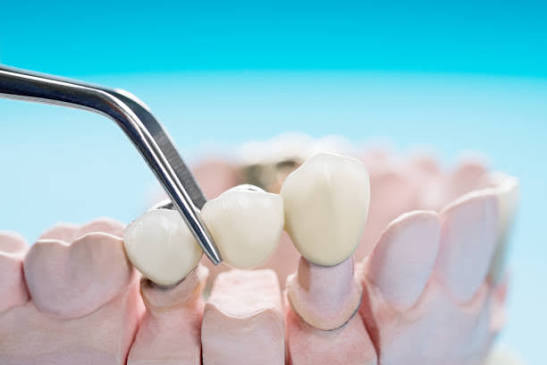
A dental bridge is a fixed dental restoration that can be used to replace one or more missing teeth in suitable cases.
A conventional bridge generally uses supporting teeth on either side of a missing-tooth space to support the replacement tooth or teeth. The replacement tooth within a bridge is commonly called a pontic, while the supporting teeth are referred to as abutment teeth.
The suitability and design of a bridge depend on factors such as:
- Location of the missing tooth
- Number of missing teeth
- Condition of supporting teeth
- Gum health
- Bite
- Available support
- Overall oral health
When Is a Dental Bridge Recommended?
A dental bridge in Kalapatti may be considered when one or more teeth are missing and the surrounding dental conditions are suitable for bridge treatment.
Replacing a Missing Tooth
A bridge can fill the space created by a missing tooth and restore part of the appearance and function of the dental arch.
Replacing Multiple Missing Teeth
Certain bridge designs may be used to replace more than one missing tooth, depending on the location and available support.
Restoring the Appearance of a Smile
A missing tooth can create a visible gap when you smile. A suitable bridge can help restore the appearance of the area.
Supporting Chewing Function
Replacing a missing tooth may help restore aspects of chewing function, depending on its location and the overall bite.
Not every missing-tooth situation is suitable for a bridge. Your dentist needs to assess the supporting teeth and surrounding structures before recommending treatment.
What Is the Difference Between a Dental Crown and a Dental Bridge?
Although both are dental restorations, crowns and bridges serve different purposes.
| Dental Crown | Dental Bridge |
|---|---|
| Usually restores a damaged or weakened tooth | Replaces a missing tooth or teeth |
| Covers a prepared tooth | Fills a gap created by missing teeth |
| Restores the shape and function of an existing tooth | Helps restore the appearance and function of a missing-tooth area |
| May be recommended after root canal treatment in suitable cases | Uses supporting structures according to the bridge design |
| Treatment generally focuses on an individual tooth | Treatment focuses on the missing-tooth space and its support |
A crown is generally considered when the natural tooth is still present and can be restored. A bridge may be considered when a tooth is missing and appropriate support is available.
What Dental Problems Can Crown & Bridge Treatment Address?
Crown and bridge treatment may be considered for different restorative concerns.
Broken or Damaged Teeth
A crown may be considered when a tooth has lost substantial structure and requires additional protection.
Deeply Decayed Teeth
When extensive decay has weakened a tooth, your dentist may assess whether the tooth can be restored and whether a crown is appropriate.
Root Canal Treated Teeth
A root canal treated tooth may require a suitable final restoration to protect the remaining tooth structure, depending on the individual case.
Missing Teeth
A dental bridge may be considered to replace selected missing teeth when the surrounding conditions are suitable.
Gaps Caused by Tooth Loss
A missing tooth can create a visible and functional gap. A suitable restoration may help address the appearance and function of the area.
Who May Be Suitable for a Dental Crown?
A crown may be suitable when a natural tooth has sufficient remaining structure or can be appropriately restored to support the planned crown.
Your dentist may assess:
- Remaining tooth structure
- Extent of decay or damage
- Gum health
- Root condition
- Bite
- Existing restorations
- Overall oral health
The condition of the tooth determines whether a crown is appropriate or whether another treatment may be required.
Who May Be Suitable for a Dental Bridge?
A bridge may be considered when a missing-tooth area has suitable supporting structures.
Your dentist may assess:
- Condition of neighbouring teeth
- Gum health
- Tooth alignment
- Bite
- Size and location of the missing-tooth space
- Number of missing teeth
- Overall oral health
The supporting teeth are particularly important for a conventional bridge because they may carry part of the functional load of the restoration.
Can Crowns and Bridges Improve the Appearance of Your Smile?
Yes. In addition to restoring function, crowns and bridges can have aesthetic benefits.
A well-planned restoration may help improve:
- Tooth shape
- Tooth colour
- Smile appearance
- The appearance of a missing-tooth space
- Overall dental proportions
The aesthetic result depends on factors such as the restoration material, surrounding teeth, tooth position, bite, and treatment planning. The goal should be to create a restoration that fits naturally with the surrounding teeth rather than simply making the restored tooth look different.
Crown & Bridge Treatment vs Dental Implants
Dental bridges and dental implants are different approaches to replacing missing teeth. A dental bridge uses suitable supporting structures to replace a missing tooth or teeth. A dental implant involves placing an implant fixture in the jawbone to support a dental restoration. A dental crown generally restores a natural tooth that is still present but has been significantly damaged or weakened.
The appropriate option depends on:
- Oral health
- Condition of neighbouring teeth
- Bone availability
- Gum health
- Number of missing teeth
- Bite
- Treatment goals
- Overall dental condition
If you have a missing tooth, a dental consultation can help you understand whether a bridge, dental implant, or another tooth replacement option may be suitable.
Why Is a Dental Assessment Important Before Crown or Bridge Treatment?
A crown or bridge should not be selected simply based on appearance. Before treatment, your dentist needs to understand:
- Why the tooth is damaged or missing
- How much healthy tooth structure remains
- Condition of surrounding teeth
- Gum health
- Bite
- Existing restorations
- Overall oral health
This assessment helps determine whether a crown, bridge, implant, filling, or another treatment would be appropriate. At Gold's Dental Clinic in Kalapatti, Dr. Thangadurai Paramasivam, BDS, Dental Surgeon and Consultant Advanced Oral Implantologist, can assess your dental condition and discuss suitable restorative options.
When Should You Consider a Crown or Bridge Consultation?
Consider a dental consultation if you have:
- A broken or significantly damaged tooth
- A heavily restored tooth
- A tooth that has undergone root canal treatment
- A missing tooth
- A visible gap caused by tooth loss
- Difficulty chewing because of a damaged or missing tooth
- Concerns about the appearance of a damaged or missing tooth
An examination can help identify the underlying problem and determine whether a dental crown, dental bridge, dental implant, or another treatment may be appropriate.
What Happens During Dental Crown Treatment?
The treatment process for a dental crown and a dental bridge differs because they address different dental situations. Your dentist will plan the treatment according to your dental condition, the restoration required, and your bite.
Initial Examination
Your dentist first examines the tooth to determine whether a crown is appropriate, assessing remaining tooth structure, decay or damage, gum health, previous treatment, bite, and existing restorations. Dental imaging may be recommended when required.
Preparing the Tooth for a Crown
If a crown is suitable, the tooth may be carefully prepared to create the space required for the restoration. The amount of preparation depends on the condition of the tooth and the type of crown being planned.
Taking an Impression or Digital Scan
An impression or digital scan may be taken to help create a crown that fits the prepared tooth and works appropriately with the surrounding teeth.
Temporary Crown When Required
Depending on the treatment plan, a temporary crown may be placed while the final restoration is being prepared. Your dentist will provide instructions on how to care for the temporary crown.
Checking the Final Crown
When the final crown is ready, your dentist will check its fit, shape, colour, bite, and contact with neighbouring teeth. Necessary adjustments can be made before final placement.
Final Crown Placement
Once the crown has been evaluated and considered suitable, it is placed using an appropriate dental cement or bonding method according to the restoration and clinical situation.
What Are the Different Types of Dental Crowns?
Dental crowns are available in different materials, including ceramic or porcelain, zirconia, and metal or metal-supported crowns. The right type depends on the location of the tooth, remaining tooth structure, bite forces, aesthetic requirements, oral health, and treatment goals.
Ceramic or Porcelain Crowns
Ceramic or porcelain crowns are tooth-coloured restorations designed to provide a natural-looking appearance. They may be considered when matching the restoration with the surrounding teeth is an important part of treatment, and may be suitable for selected cases where aesthetics are a priority.
Zirconia Crowns
Zirconia crowns are ceramic dental restorations made from zirconium dioxide and can offer a combination of strength and tooth-coloured aesthetics. They may be considered for selected teeth depending on their location, function, bite, and clinical requirements.
Metal or Metal-Supported Crowns
Metal or metal-supported crowns use metal as the main restorative material or as structural support beneath an outer aesthetic layer, depending on the crown design. They may be considered when durability and functional demands are important.
Which Type of Dental Crown Is Right for You? There is no single crown material that is best for every patient. Your dentist will consider the tooth's location, remaining structure, bite, chewing forces, aesthetic expectations, gum health, and overall dental condition before recommending a crown.
| Crown Type | Main Consideration | Appearance |
|---|---|---|
| Ceramic / Porcelain | Aesthetics and natural appearance | Tooth-coloured |
| Zirconia | Strength + aesthetics | Tooth-coloured |
| Metal / Metal-supported | Strength and functional demands | Depends on design |
At Gold's Dental Clinic in Kalapatti, Coimbatore, the appropriate crown option can be discussed after examining the tooth and understanding your treatment requirements.
What Happens After Getting a Dental Crown?
After your final dental crown has been placed, you may need a short adjustment period while your mouth becomes accustomed to the restoration.
Getting Used to Your New Crown
The crown may initially feel different from your natural tooth. Your dentist will check the fit and bite during placement and can make adjustments if required.
Mild Sensitivity or Tenderness
Some patients may experience temporary sensitivity or tenderness after crown treatment. This can vary depending on the condition of the tooth and the treatment performed. If you experience severe or persistent discomfort, contact your dentist for an assessment.
Eating After Crown Placement
Follow your dentist's instructions regarding eating immediately after treatment, particularly if a temporary crown has been placed. Once the permanent crown has been fitted, your dentist can advise you about returning to normal eating.
Maintaining Your Crown
A crowned tooth still requires regular oral hygiene: brush regularly, clean between your teeth, keep the gumline clean, avoid biting hard objects, avoid using your teeth to open packages, and attend regular dental check-ups.
A crown protects the treated tooth, but the tooth and surrounding gum can still develop dental problems.
What Can You Eat After Getting a Dental Crown?
Your dentist will provide specific instructions depending on whether you have a temporary or permanent crown.
If you have a temporary crown, you may be advised to avoid particularly hard or sticky foods that could loosen or damage it. After placement of the final crown, your dentist can advise you about returning to normal eating.
Avoid using the crowned tooth to bite non-food objects or excessively hard items.
What Should You Do If a Dental Crown Becomes Loose?
If your crown becomes loose or comes off:
- Avoid chewing heavily on that side
- Do not attempt to permanently fix it yourself
- Keep the crown safe if it has come out
- Contact your dental clinic
- Arrange an assessment
A loose crown can have different causes, including problems involving the restoration, underlying tooth, or cement. Your dentist can identify the cause and recommend the appropriate treatment.
What Happens During Dental Bridge Treatment?
Dental bridge treatment begins with an assessment of the missing-tooth area and the structures that will support the restoration.
Assessing the Missing-Tooth Space
Your dentist examines the location and size of the space created by the missing tooth or teeth.
Checking the Supporting Teeth
For a conventional bridge, the supporting teeth are an important part of the treatment plan. Your dentist may assess their strength, position, gum health, existing restorations, and ability to support the bridge.
Preparing the Supporting Teeth
If a conventional bridge is appropriate, the supporting teeth may need to be prepared to accommodate the planned restoration.
Taking an Impression or Digital Scan
An impression or digital scan can be used to create a bridge that fits the prepared area and relates appropriately to the surrounding teeth.
Temporary Bridge When Required
A temporary restoration may be provided while the final bridge is being prepared, depending on the treatment plan.
Checking the Final Bridge
Before final placement, your dentist can assess fit, bite, shape, appearance, contact with neighbouring teeth, and relationship with supporting teeth.
Final Bridge Placement
Once the bridge has been evaluated and any necessary adjustments have been made, it can be placed according to the planned treatment.
What Happens After Getting a Dental Bridge?
After a dental bridge is placed, your mouth may need some time to adjust to the new restoration.
Adjusting to Your New Bridge
The bridge may initially feel different because it fills a space that was previously occupied by a missing tooth. Your dentist will check its fit and bite.
Getting Used to Chewing
You may need a short adjustment period while becoming familiar with chewing with your new bridge. Your dentist can provide specific instructions depending on the location and type of bridge.
Cleaning Around and Under the Bridge
Cleaning around and underneath a bridge is particularly important because food and plaque can accumulate around the supporting teeth and replacement tooth. Your dentist may recommend interdental brushes, appropriate flossing techniques, or other suitable cleaning aids.
Monitoring the Supporting Teeth
The supporting teeth remain natural teeth and can still develop decay or gum problems. Regular dental examinations can help monitor the supporting teeth and surrounding gums.
What Can You Eat After Getting a Dental Bridge?
Your dentist will provide eating instructions based on the type of bridge and whether you have a temporary or permanent restoration.
During the initial adjustment period, you may find it more comfortable to choose foods that are easier to chew. If you have a temporary bridge, particularly hard or sticky foods may need to be avoided to reduce the risk of damaging or dislodging it.
Once the permanent bridge has been placed and you have adjusted to it, your dentist can advise you about normal eating.
What Should You Do If a Dental Bridge Becomes Loose?
A loose dental bridge should be assessed by a dentist because both the bridge and its supporting teeth need to be evaluated.
Until you receive professional advice:
- Avoid chewing heavily on the affected side
- Do not pull or manipulate the bridge
- Do not attempt to permanently reattach it yourself
- Contact the dental clinic
- Keep the restoration safe if it has completely detached
The cause of a loose bridge may involve the restoration, supporting teeth, gums, or the cement used to secure it.
What Types of Dental Bridges Are Available?
Different bridge designs can be considered depending on the location of the missing tooth, available support, and overall dental condition.
Traditional Dental Bridges
A traditional bridge generally uses prepared supporting teeth on either side of a missing-tooth space.
Other Bridge Designs
Other designs may be considered in selected situations depending on the location and available support. The appropriate bridge design should be determined after an individual dental assessment.
How Long Does Crown and Bridge Treatment Take?
There is no single treatment timeline for every crown or bridge.
The overall duration can depend on:
- Number of teeth involved
- Condition of the tooth or supporting teeth
- Type of restoration
- Need for preliminary treatment
- Laboratory fabrication time
- Number of appointments
- Necessary adjustments
A straightforward restoration may require fewer appointments, while a more complex case may require additional stages. Your dentist can explain the expected timeline after examining your teeth.
How Long Do Dental Crowns and Bridges Last?
Crowns and bridges are designed as long-term restorations, but their longevity varies between individuals.
Factors that can affect their longevity include:
- Oral hygiene
- Gum health
- Bite forces
- Teeth grinding or clenching
- Diet and lifestyle
- Restoration material
- Condition of supporting teeth
- Regular dental maintenance
- Routine dental check-ups
Proper care and regular professional monitoring can help maintain the restoration and surrounding teeth.
Why Are Regular Dental Check-Ups Important After Crown or Bridge Treatment?
A crown or bridge does not make your surrounding teeth and gums immune to dental problems.
Regular dental visits allow your dentist to monitor:
- The restoration
- Supporting teeth
- Gum health
- Bite
- Oral hygiene
- Signs of decay
- Wear or damage
Early identification of a problem may help prevent more extensive restorative treatment later.
How Much Does Crown and Bridge Treatment Cost in Kalapatti, Coimbatore?
The cost of crown and bridge treatment in Kalapatti, Coimbatore depends on the type of restoration required and the condition of the tooth or missing-tooth area. There is no single price that applies to every patient. A dental crown and a dental bridge have different treatment requirements, and the final cost is determined after an individual assessment.
What Affects the Cost of a Dental Crown?
The cost of a dental crown in Kalapatti may depend on:
- Type and material of the crown
- Condition of the tooth
- Amount of tooth preparation required
- Need for additional dental treatment
- Laboratory requirements
- Number of appointments
- Follow-up requirements
What Affects the Cost of a Dental Bridge?
The cost of a dental bridge in Kalapatti may depend on:
- Number of teeth being replaced
- Type of bridge
- Material selected
- Condition of supporting teeth
- Preparation required
- Laboratory requirements
- Additional dental treatment
- Number of appointments
A consultation is the best way to understand the treatment required and receive a case-specific cost estimate.
What Happens During a Crown or Bridge Consultation?
Your consultation is focused on identifying the dental problem and determining which restoration is appropriate.
For a Dental Crown
If you have a damaged or weakened tooth, your dentist may assess:
- Remaining tooth structure
- Extent of damage or decay
- Condition of surrounding teeth
- Gum health
- Bite and alignment
- Existing restorations
For a Dental Bridge
If you have a missing tooth, your dentist may assess:
- Size and location of the missing-tooth space
- Condition of neighbouring teeth
- Gum health
- Bite
- Existing restorations
- Alignment of supporting teeth
- Overall oral health
This helps determine whether a bridge is a suitable option for replacing the missing tooth.
Discussing Your Treatment Options
After the examination, your dentist can explain the appropriate options and discuss factors such as treatment stages, restoration type, expected appointments, maintenance, and cost.
Why Choose Gold's Dental Clinic for Crown & Bridge Treatment?
Restorative dentistry requires consideration of both the appearance and function of the restoration.
At Gold's Dental Clinic in Kalapatti, Coimbatore, treatment planning is based on the patient's individual dental condition rather than using the same restoration for every case.
The clinic is owned by Dr. Thangadurai Paramasivam, BDS, Dental Surgeon and Consultant Advanced Oral Implantologist, with 3+ years of clinical experience.
Patients can discuss concerns involving damaged teeth, weakened teeth, root canal treated teeth, or missing teeth and understand the restorative options that may be appropriate for their situation.
Dental Crowns in Kalapatti, Coimbatore
If you are searching for dental crowns in Kalapatti, a crown may be considered when a natural tooth has significant structural damage or requires additional protection.
Common situations where a crown may be discussed include:
- Broken teeth
- Severely damaged teeth
- Teeth with extensive restorations
- Selected root canal treated teeth
- Weakened or worn teeth
The suitability of a crown depends on the amount of healthy tooth structure remaining and the overall condition of the tooth.
Dental Bridges in Kalapatti, Coimbatore
If you are searching for dental bridges in Kalapatti, a bridge may be considered when one or more teeth are missing and appropriate supporting structures are available.
A dental bridge may help:
- Replace a missing tooth
- Fill a visible gap
- Restore part of the chewing function
- Improve the appearance of the smile
The supporting teeth and surrounding tissues need to be assessed before a bridge is recommended.
Dental Crowns & Bridges vs Dental Implants
If you have a missing tooth, you may have several treatment options.
A dental bridge uses suitable supporting structures to replace the missing tooth.
A dental implant uses an implant fixture placed in the jawbone to support a restoration.
A dental crown generally restores a natural tooth that is still present but has been significantly damaged or weakened.
The most appropriate option depends on:
- Condition of neighbouring teeth
- Gum health
- Bone availability
- BIte
- Number of missing teeth
- Overall oral health
- Treatment goals
A dental consultation can help you understand which option is appropriate for your particular situation.
FAQs
Frequently Asked Questions About Crowns & Bridges
A crown may be considered when a tooth has significant structural damage, extensive restoration, certain root canal treatment requirements, or other conditions where additional coverage is appropriate.
A crown can restore certain broken or significantly damaged teeth when enough healthy tooth structure remains to support the restoration.
Some root canal-treated teeth may benefit from a crown, depending on the remaining tooth structure, tooth location, and functional requirements.
Local anaesthesia can be used when necessary during tooth preparation. Some patients may experience temporary sensitivity or tenderness after treatment. Persistent or severe discomfort should be assessed by a dentist.
Treatment time varies according to the condition of the tooth, crown type, laboratory requirements, and number of appointments needed.
Your dentist may recommend an interdental brush, suitable flossing technique, floss threader, or another cleaning aid depending on the bridge design.
The longevity of a bridge depends on factors including oral hygiene, gum health, supporting teeth, bite forces, restoration material, and maintenance.
A crown generally restores an existing damaged or weakened tooth, while a bridge is designed to replace a missing tooth or teeth using appropriate supporting structures.
A bridge and a dental implant are different treatment approaches. The appropriate option depends on your gum health, bone condition, neighbouring teeth, bite, overall oral health, and treatment goals.
Book a Crown or Bridge Consultation in Kalapatti, Coimbatore
Have a damaged, weakened, broken, or missing tooth? A dental examination can help determine whether a dental crown, dental bridge, dental implant, or another restorative treatment is suitable for your needs.
At Gold's Dental Clinic in Kalapatti, Coimbatore, you can discuss your dental concern with Dr. Thangadurai Paramasivam, Cosmetic Dental Surgeon and Consultant Advanced Oral Implantologist, and understand the treatment options available for your individual dental condition.
Schedule Your Dental ConsultationVisit Gold's Dental Clinic
Clinic Address
Gold's Dental Clinic
First Floor, 31/2, Vilanguruchi Road,
Near Four Function, Above Apollo Pharmacy,
Kalapatti, Coimbatore, Tamil Nadu - 641048.
Medical Disclaimer
The information on this page is provided for general educational purposes and does not replace a professional dental examination, diagnosis, or personalised treatment advice. The need for a crown or bridge, treatment approach, recovery time, cost, and expected outcome can vary between individuals. A qualified dental professional should assess your condition before treatment.