Dental Implants in Kalapatti, Coimbatore
Missing one or more teeth can affect more than the appearance of your smile. It may make chewing less comfortable, affect how your remaining teeth meet, and gradually change the way your teeth function together. Dental implants are a tooth replacement option designed to provide a stable foundation for a dental restoration in suitable patients.
At Gold's Dental Clinic in Kalapatti, Coimbatore, dental implant treatment begins with an assessment of your individual oral health, missing-tooth condition, gum health, bite, and available bone support. The clinic is owned by Dr. Thangadurai Paramasivam, Cosmetic Dental Surgeon and Consultant Advanced Oral Implantologist, who has 3+ years of clinical experience.
Whether you have lost a single tooth, several teeth, or are looking for a solution for more extensive tooth loss, a professional consultation can help determine whether dental implants or another tooth replacement option is appropriate for you.
Book Your ConsultationWhat Are Dental Implants?
A dental implant is a tooth replacement solution that uses an implant fixture placed within the jawbone to support a dental restoration. Depending on the treatment plan, the restoration may be a crown, bridge, or denture.
Unlike a conventional removable denture, an implant-supported restoration is anchored using an implant fixture. The treatment is planned according to the patient's tooth loss, bone condition, gum health, bite, and overall dental requirements.
Dental implants are not simply a replacement tooth placed above the gums. The treatment involves assessment, surgical placement of the implant, healing, restoration, and ongoing maintenance.
How Does a Dental Implant Replace a Missing Tooth?
A dental implant is designed to provide support for the visible replacement tooth.
The implant fixture is placed in the jawbone, where it undergoes a healing process known as osseointegration. Once appropriate healing has taken place, the implant can support an abutment and dental restoration according to the treatment plan.
This creates a replacement structure that is supported by the jaw rather than relying only on neighbouring teeth.
What Are the Main Parts of a Dental Implant?
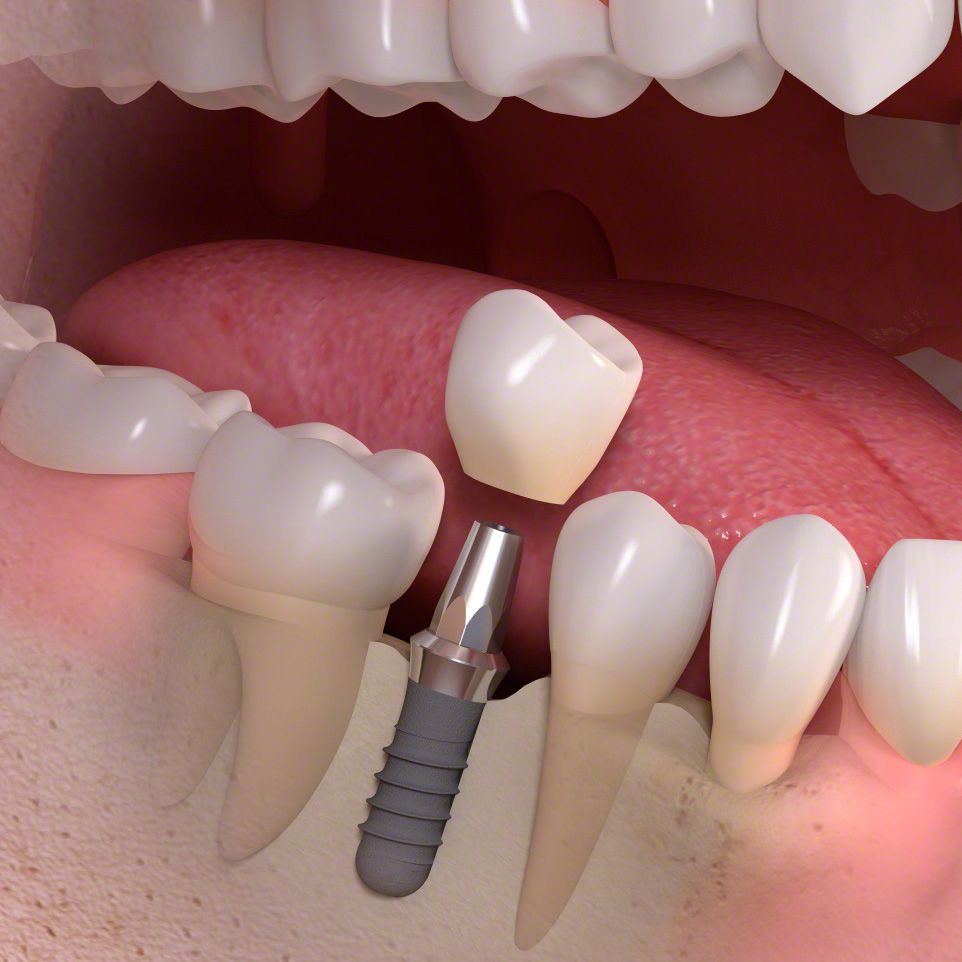
A typical dental implant restoration consists of three main components:
- Implant fixture: positioned within the jawbone and serves as the foundation for the restoration.
- Abutment: connects the implant fixture to the final dental restoration.
- Dental crown or restoration: the visible replacement tooth designed to restore appearance and function. An implant may also support a bridge or denture.
The exact design of treatment varies according to the number of missing teeth and the patient's individual dental condition.
Who May Need Dental Implants?
Dental implants may be considered for people who have lost teeth due to different causes, including tooth decay, gum disease, injury, or other dental conditions.
They may be considered for:
- A single missing tooth
- Multiple missing teeth
- Several consecutive missing teeth
- More extensive tooth loss
- Patients looking for an alternative to certain removable tooth replacement options
However, tooth loss alone does not determine whether an implant is appropriate. The condition of the gums, jawbone, remaining teeth, bite, and overall oral health also needs to be evaluated.
What Problems Can Missing Teeth Cause?
Losing a tooth can change more than the appearance of your smile. The effects can depend on which tooth is missing, how many teeth are affected, and how long the tooth has been absent.
Difficulty Chewing
Missing teeth can make it harder to bite or chew certain foods comfortably. If several teeth are missing, the impact on chewing function may become more noticeable.
Changes in the Bite
Your teeth work together as a system. When one or more teeth are missing, the way your remaining teeth meet can change.
Shifting of Nearby Teeth
Neighbouring teeth may move into the space created by tooth loss. Such movement can affect alignment and the relationship between the teeth.
Changes in the Jawbone
The jawbone surrounding a natural tooth receives stimulation through normal tooth function. Following tooth loss, the bone in that area can gradually change over time.
The extent of these changes varies between individuals, which is why early dental evaluation after tooth loss can be useful.
Are Dental Implants Suitable for Everyone?
Dental implants are not automatically suitable for every patient.
Your dentist may need to assess:
- Jawbone quantity and quality
- Gum health
- Oral hygiene
- Condition of neighbouring teeth
- Bite relationship
- Existing dental conditions
- Smoking or tobacco use
- Overall health and healing considerations
Adequate bone support is an important consideration because the implant fixture needs suitable support within the jaw.
If there is insufficient bone or another condition that affects implant placement, your dentist can discuss whether additional treatment or an alternative tooth replacement option may be appropriate.
A detailed assessment is therefore essential before deciding on dental implant treatment.
Dental Implants vs Dentures vs Dental Bridges
Dental implants, dentures, and dental bridges are different approaches to replacing missing teeth. The most suitable option depends on the number and position of missing teeth, oral health, bone support, budget, treatment goals, and individual circumstances.
| Feature | Dental Implants | Dental Bridges | Dentures |
|---|---|---|---|
| Support | Implant-supported | Usually supported by neighbouring teeth | Rests on oral tissues and/or other supporting structures |
| Removable | Usually not removable by the patient | No | Generally removable |
| Tooth replacement | Single tooth or multiple teeth | Can replace one or more adjacent teeth | Can replace multiple or all teeth |
| Treatment requirements | Surgical placement and healing | Requires suitable supporting teeth | Does not require implant surgery |
| Maintenance | Requires regular oral and professional care | Requires oral hygiene around restoration | Requires denture cleaning and maintenance |
No single option is ideal for every patient. A dental consultation helps determine which approach fits your oral condition and tooth replacement needs.
Types of Dental Implant Solutions
The appropriate implant-supported treatment depends on how many teeth are missing and where they are located.
Single-Tooth Dental Implant
A single dental implant can be considered when one tooth is missing and the surrounding conditions are suitable. The implant supports an individual dental crown, providing a fixed replacement option without using a removable denture.
Multiple Dental Implants
When several teeth are missing, multiple implants may be used to support individual restorations or another planned implant-supported solution. The number of implants required depends on the location and number of missing teeth, available bone, and overall treatment plan.
Implant-Supported Bridge
An implant-supported bridge can replace multiple adjacent missing teeth by using dental implants as support for the bridge. This may provide an alternative to placing an individual implant for every missing tooth in selected cases.
Implant-Supported Denture
For patients with extensive tooth loss, implants may be used to provide additional support and stability for a denture. The number and position of implants required depend on the patient's oral condition and the proposed treatment design.
Full-Mouth Implant Rehabilitation
Patients with extensive or complete tooth loss may be evaluated for a comprehensive implant-supported rehabilitation approach. This requires detailed assessment of the remaining oral structures, bone support, bite, aesthetics, and functional requirements before a treatment plan is developed.
Why Is an Implant Consultation Important Before Treatment?
A dental implant should not be selected based solely on the fact that a tooth is missing. Successful treatment planning requires an understanding of the conditions surrounding the missing tooth.
During an assessment, your dentist can evaluate:
- The location of the missing tooth
- Condition of the gums
- Available jawbone
- Remaining teeth
- Bite and tooth relationships
- Oral hygiene
- Existing dental conditions
- Suitable restoration options
This allows the treatment to be planned around your individual needs rather than using the same approach for every patient.
At Gold's Dental Clinic in Kalapatti, patients can discuss their tooth replacement concerns with Dr. Thangadurai Paramasivam, BDS, Dental Surgeon and Consultant Advanced Oral Implantologist, and understand the available treatment options following an appropriate dental assessment.
How Does Dental Implant Treatment Work?
Dental implant treatment is completed through a series of planned stages rather than in a single appointment. The exact sequence can vary depending on the number of missing teeth, bone condition, gum health, and type of restoration being planned.
At Gold's Dental Clinic, the treatment journey begins with an individual assessment so that the proposed implant placement and final restoration can be planned according to your dental requirements.
Initial Consultation and Treatment Discussion
Your first appointment focuses on understanding your tooth loss and overall dental needs. Your dentist may discuss:
- When and how the tooth was lost
- Your current concerns
- Previous dental treatments
- Difficulty with chewing or speaking
- Your expectations from tooth replacement
- Available treatment options
This is also an opportunity to ask questions about the implant procedure, healing process, restoration, maintenance, and expected costs.
Dental Examination and Imaging
Your teeth, gums, bite, and the area of the missing tooth are examined before implant placement is planned.
Dental imaging may be recommended to evaluate the underlying structures and available bone. The type of imaging required depends on the individual case.
This information helps the dentist understand the implant site and plan the proposed treatment more precisely.
Creating an Individual Implant Treatment Plan
The treatment plan takes into account factors such as:
- Number of missing teeth
- Location of the missing teeth
- Available bone
- Gum condition
- Remaining natural teeth
- Bite relationship
- Type of restoration required
- Any additional treatment that may be necessary
The aim is to create a treatment pathway that considers both the implant placement and the final replacement tooth.
Implant Placement
During the implant placement procedure, the implant fixture is positioned in the planned area of the jawbone.
The procedure and anaesthesia used are determined according to the individual's treatment requirements. Your dentist will explain what to expect before the procedure, including preparation and aftercare instructions.
The implant then requires a period of healing before the final restoration is completed.
Healing and Osseointegration
Following implant placement, the surrounding bone undergoes a healing process called osseointegration. During this period, the bone gradually integrates with the implant surface.
The time required for healing can differ between patients depending on factors such as:
- Implant location
- Bone condition
- Overall oral health
- Individual healing response
- Whether additional procedures were performed
Your dentist will determine when the implant is ready for the next stage of treatment.
Abutment and Final Restoration
Once the appropriate healing stage has been reached, the implant can be prepared to support the final restoration.
An abutment connects the implant fixture with the planned restoration. Depending on the treatment, this may be a dental crown, bridge, or implant-supported denture.
The final restoration is designed to restore the missing tooth or teeth while considering appearance, function, and the relationship with your remaining teeth.
What Happens During Dental Implant Placement?
Dental implant placement is a planned surgical procedure carried out after assessing the patient's oral condition and implant site.
Before the procedure, your dentist will explain the treatment steps and provide instructions relevant to your case.
During placement, the implant fixture is positioned in the planned location within the jawbone. The area is managed using appropriate anaesthesia, and the implant is allowed to heal before proceeding with the restoration stage.
The exact procedure varies according to:
- Number of implants
- Location of the implant
- Bone condition
- Gum health
- Need for additional procedures
- Overall complexity of the case
A personalised consultation is therefore necessary rather than assuming that every implant procedure follows exactly the same process.
What If You Do Not Have Enough Bone for a Dental Implant?
Adequate bone support is an important consideration when planning dental implants.
After tooth loss, the jawbone in the affected area may change over time. Some patients may therefore require additional evaluation before implant placement can be planned.
Depending on the individual situation, your dentist may discuss options such as:
- Bone grafting
- Other bone augmentation procedures
- Alternative implant positioning
- Alternative tooth replacement options
Not every patient with reduced bone volume will require the same approach. The appropriate option depends on the location and condition of the implant site.
How Long Does Dental Implant Treatment Take?
Dental implant treatment does not have one fixed timeline for every patient.
The overall treatment period can depend on:
- Number of missing teeth
- Location of the implant
- Available bone
- Gum health
- Healing response
- Need for additional procedures
- Type of final restoration
- Individual treatment complexity
Some patients may require additional preparation before implant placement, while others may be able to proceed with the planned implant treatment after their initial assessment.
Your dentist can explain the expected sequence and approximate timeline after evaluating your individual condition.
What Can You Expect After Dental Implant Placement?
The period immediately after implant placement is an important part of the treatment journey.
You may receive instructions regarding:
- Food and drink
- Oral hygiene
- Activity levels
- Medication, when prescribed
- Protecting the surgical area
- Follow-up appointments
Some patients may experience temporary swelling, tenderness, or discomfort following the procedure. The extent can vary according to the individual and the complexity of treatment.
Following the instructions provided by your dental team can help support the healing process.
If you experience unexpected or persistent symptoms, contact your dentist for appropriate assessment rather than trying to manage the problem yourself.
How Should You Care for Your Dental Implant During Healing?
Good oral hygiene remains important throughout the implant healing period.
Maintain Appropriate Oral Hygiene
Your dentist will explain how to clean your mouth around the treated area while it heals. Avoid disturbing the surgical site unnecessarily.
Follow Your Dietary Instructions
You may be advised to modify your food choices temporarily depending on the procedure and healing stage. Follow the specific dietary instructions provided by your dentist rather than relying on general advice.
Attend Follow-Up Appointments
Follow-up appointments allow your dentist to assess healing and determine when the next stage of treatment can proceed.
Avoid Habits That Can Affect Healing
Smoking and tobacco use can negatively affect oral health and may interfere with healing. If you use tobacco, discuss this openly with your dentist so appropriate advice can be provided.
What Happens After the Implant Has Healed?
Once the implant has reached the appropriate stage of healing, your dentist can proceed with the restoration phase according to your treatment plan.
The next stage may involve:
- Assessing the healed implant site
- Planning the restoration
- Connecting the appropriate abutment
- Fitting the dental crown, bridge, or denture
- Checking the fit and function
- Providing maintenance instructions
The objective is to restore the missing tooth or teeth in a way that works appropriately with your existing teeth and bite.
How Do You Maintain Dental Implants Long Term?
A dental implant does not mean that regular dental care is no longer necessary. The implant, surrounding gums, and final restoration all require ongoing attention.
Brush and Clean Between Your Teeth
Maintain a consistent oral hygiene routine as advised by your dentist.
Look After the Surrounding Gums
Healthy gum tissue around the implant is an important part of long-term implant care.
Attend Regular Dental Check-Ups
Routine examinations allow your dentist to monitor the implant, restoration, gums, and remaining natural teeth.
Follow Professional Maintenance Advice
Your dentist may recommend professional cleaning or other maintenance depending on your individual oral health.
How Long Can Dental Implants Last?
Dental implants are designed as a long-term tooth replacement option, but their longevity can vary between individuals.
Factors that can influence the long-term condition of an implant and its restoration include:
- Oral hygiene
- Gum health
- Regular dental examinations
- Smoking or tobacco use
- Bite forces
- Condition of the restoration
- Overall maintenance
- Individual oral health
Rather than assuming that an implant will last for a guaranteed period, regular professional monitoring and appropriate home care are important for maintaining the health of the implant and surrounding tissues.
How Much Do Dental Implants Cost in Kalapatti, Coimbatore?
The cost of dental implants in Kalapatti, Coimbatore can vary because every tooth replacement case has different clinical and restorative requirements. A single-tooth implant may involve a different treatment plan from multiple implants or a full-mouth implant-supported restoration.
Factors that may influence the overall treatment cost include:
- Number of missing teeth
- Number of implants required
- Condition of the jawbone
- Gum health
- Type of implant system used
- Type of dental crown or restoration
- Need for bone grafting or other procedures
- Diagnostic examinations and imaging
- Complexity of the case
- Follow-up and maintenance requirements
A consultation is therefore the most appropriate way to understand the treatment requirements and associated cost for your individual case.
What Happens During a Dental Implant Consultation?
A dental implant consultation allows your dentist to evaluate your oral condition before recommending a treatment approach.
Discussing Your Tooth Loss
You can explain when the tooth was lost, whether it was removed because of decay or another dental problem, and what difficulties you are currently experiencing.
Examining Your Teeth and Gums
Your dentist will assess the condition of your gums, remaining teeth, and the area where the tooth is missing.
Evaluating Bone Support
The available bone at the proposed implant site is an important part of treatment planning. Appropriate dental imaging may be recommended to evaluate the area.
Reviewing Your Bite
Your bite and the relationship between your upper and lower teeth may influence the position and type of restoration required.
Discussing Treatment Options
Based on the assessment, your dentist can explain whether an implant, bridge, denture, or another option may be appropriate.
Understanding the Treatment Plan
You can also discuss the expected stages of treatment, healing, restoration, maintenance, and the factors affecting the overall cost.
Why Choose Gold's Dental Clinic for Dental Implants?
Dental implant treatment requires careful consideration of the missing-tooth area, surrounding teeth, gums, bone support, bite, and final restoration.
Gold's Dental Clinic in Kalapatti, Coimbatore, is owned by Dr. Thangadurai Paramasivam, Cosmetic Dental Surgeon and Consultant Advanced Oral Implantologist, with 3+ years of clinical experience.
The treatment approach begins with an individual dental assessment rather than assuming that the same implant solution is appropriate for every patient.
During the consultation, patients can discuss their concerns, understand their tooth replacement options, and learn about the stages involved in their proposed treatment.
This dentist-led approach helps patients make an informed decision based on their own dental condition and treatment requirements.
Dental Implants in Kalapatti, Coimbatore
For patients looking for dental implants in Kalapatti, choosing a conveniently located dental clinic can make consultations and follow-up care easier to manage.
Gold's Dental Clinic serves patients in Kalapatti, Coimbatore, who are seeking solutions for missing teeth and exploring implant-supported tooth replacement.
Whether you have lost one tooth or have more extensive tooth loss, treatment should begin with an examination rather than choosing an implant procedure based solely on online information.
A consultation can help determine the condition of the missing-tooth area, available bone support, gum health, and the most appropriate treatment options for your case.
Dental Implants for Different Tooth Replacement Needs
Dental Implants for a Single Missing Tooth
When one tooth is missing, an individual implant-supported crown may be considered if the surrounding conditions are suitable.
Dental Implants for Multiple Missing Teeth
Patients with several missing teeth may be evaluated for multiple implants, implant-supported bridges, or other appropriate restoration options.
Dental Implants for Extensive Tooth Loss
When many or all teeth are missing, a comprehensive treatment plan may involve implant-supported dentures or other implant-based rehabilitation options.
The appropriate solution depends on the individual's oral health, bone support, remaining teeth, bite, and treatment objectives.
FAQs
Frequently Asked Questions About Dental Implants
Dental implants are tooth replacement fixtures placed within the jawbone to provide support for a dental crown, bridge, or denture, depending on the treatment plan.
Yes, a single missing tooth may be replaced with an implant-supported crown when the patient's bone, gums, remaining teeth, and overall dental condition are suitable.
Yes. Multiple missing teeth can be addressed using different implant-supported solutions, including multiple implants, implant-supported bridges, or implant-supported dentures, depending on the case.
Implant placement is performed using appropriate anaesthesia. Some patients may experience temporary discomfort, swelling, or tenderness after the procedure. Your dentist will provide case-specific instructions for managing the recovery period.
The treatment timeline varies according to the number of implants, bone condition, healing response, need for additional procedures, and type of restoration. Your dentist can explain the expected sequence after evaluating your case.
If the available bone is insufficient for the planned implant placement, your dentist may discuss bone grafting, other augmentation procedures, alternative implant planning, or other tooth replacement options, depending on your condition.
Maintain good oral hygiene, clean around the implant and restoration as instructed, attend regular dental examinations, and follow your dentist's recommendations for professional maintenance.
Dental implants are intended as a long-term tooth replacement option, but their longevity varies between individuals. Oral hygiene, gum health, tobacco use, bite forces, restoration conditions, and regular professional care can all influence long-term outcomes.
Dental implants and dentures serve different purposes and have different treatment requirements. Implants may provide an implant-supported solution for suitable patients, while dentures can be an appropriate option in other situations. Your dentist can help you compare the options based on your needs.
In selected situations, implant placement may be considered at the time of tooth removal. However, this is not appropriate for every patient. The condition of the extraction site, bone, gums, infection, and other factors need to be assessed before deciding.
Dental implants require ongoing oral hygiene and professional monitoring. Although they are artificial tooth replacements, the surrounding gums and remaining natural teeth still need regular care.
Why Regular Follow-Up Matters After Dental Implant Treatment
Dental implant care does not end when the final crown, bridge, or denture is placed.
Regular dental reviews can help your dentist monitor:
- Implant stability
- Gum health
- Condition of the restoration
- Oral hygiene
- Remaining natural teeth
- Changes in your bite
- Any developing concerns around the implant
Consistent maintenance is an important part of protecting your oral health and supporting the long-term function of your implant-supported restoration.
Take the Next Step Towards Replacing Your Missing Tooth
If you have a missing tooth or multiple missing teeth and are considering dental implants in Kalapatti, Coimbatore, the first step is a professional dental assessment.
At Gold's Dental Clinic, Dr. Thangadurai Paramasivam, Cosmetic Dental Surgeon and Consultant Advanced Oral Implantologist, can assess your individual dental condition and discuss appropriate tooth replacement options.
Whether you are exploring a single-tooth implant, multiple dental implants, implant-supported bridge, or another tooth replacement solution, understanding your options begins with a personalised consultation.
Schedule a Dental Implant Consultation TodayVisit Gold's Dental Clinic for Dental Implants in Kalapatti, Coimbatore
Looking for dental implants in Kalapatti, Coimbatore? Visit Gold's Dental Clinic for a dental implant consultation and discuss your missing-tooth concerns and available tooth replacement options with Dr. Thangadurai Paramasivam, Cosmetic Dental Surgeon and Consultant Advanced Oral Implantologist.
Clinic Address
Gold's Dental Clinic
First Floor, 31/2, Vilanguruchi Road,
Near Four Function, Above Apollo Pharmacy,
Kalapatti, Coimbatore, Tamil Nadu - 641048.
Medical Disclaimer
The information on this page is provided for general educational purposes and does not replace a professional dental examination, diagnosis, or personalised treatment plan. Dental implant suitability, treatment duration, expected outcomes, and cost vary between individuals. A qualified dental professional should assess your oral health and recommend the appropriate treatment based on your specific needs.